Fayette Michigan Historic Town
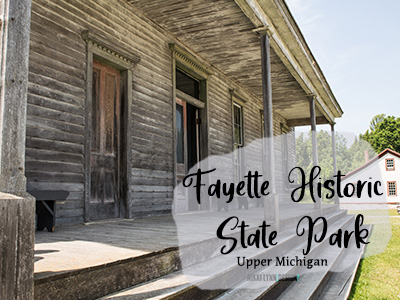
Fayette Michigan Historic Town – is located on the southern side of Michigan’s Upper Peninsula. It is located in Big Bay de Noc on Lake Michigan waters.

Fayette Historic Town – Michigan was started as a pig iron smelting operation. The Jackson Iron Company had workers migrate from Canada, the British Isles, and Northern Europe to work the furnaces and kilns.

The town was built on the work of the pig iron smelting operation. In 1891, Jackson Iron Company closed its operation. Forcing most of the workers to seek work in other towns.
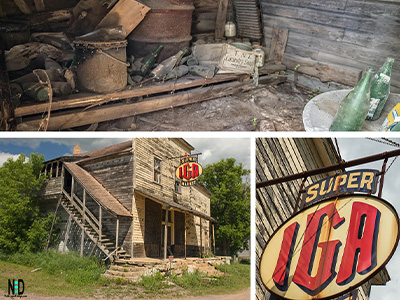
Many of the kilns and buildings remain.

This kiln was loaded with 35 cords of hardwood. The kiln would char for 6-8 days. After charring, the kiln would produce 1,750 pounds of charcoal.

One, of two blast furnaces on the property.

Hotel in the town.

The complete barbershop inside the hotel. Many of the buildings on the property have the original contents.

One of the old houses. There are several old homes. Including a doctor’s home in the town.

Inside the schoolhouse.
In total there are 19 structures on the property. All waiting for you to view and explore.
Take a few days to explore everything. Camp in one of their sites, hike and enjoy all it has to offer.
After the iron smelting operation closed. The grounds were sold.
From 1916 – 1946 the grounds were used as a resort. In 1946 a private owner purchased the land. The owner fell behind on taxes, forcing the sale of the property. Escanaba Paper Company purchased the land and ended up swapping the Michigan government. The town for timber.

In 1959, Fayette became a state park.
It is a fun town to explore. Boat into the protected harbor, called Snail Shell Harbor. The park allows you to dock and stay overnight for a small fee.

Otherwise, drive to Fayette. Either way, Fayette Michigan Historic Town has interesting things to see.
Until next time friends. Take care!
Disclaimer: This site is provided for entertainment and informational purposes. If you venture to any of the locations I list on this site you are doing so of your own free will. In making that choice – you have taken personal responsibility for any outcome. Emotionally, physically and monetary-wise.