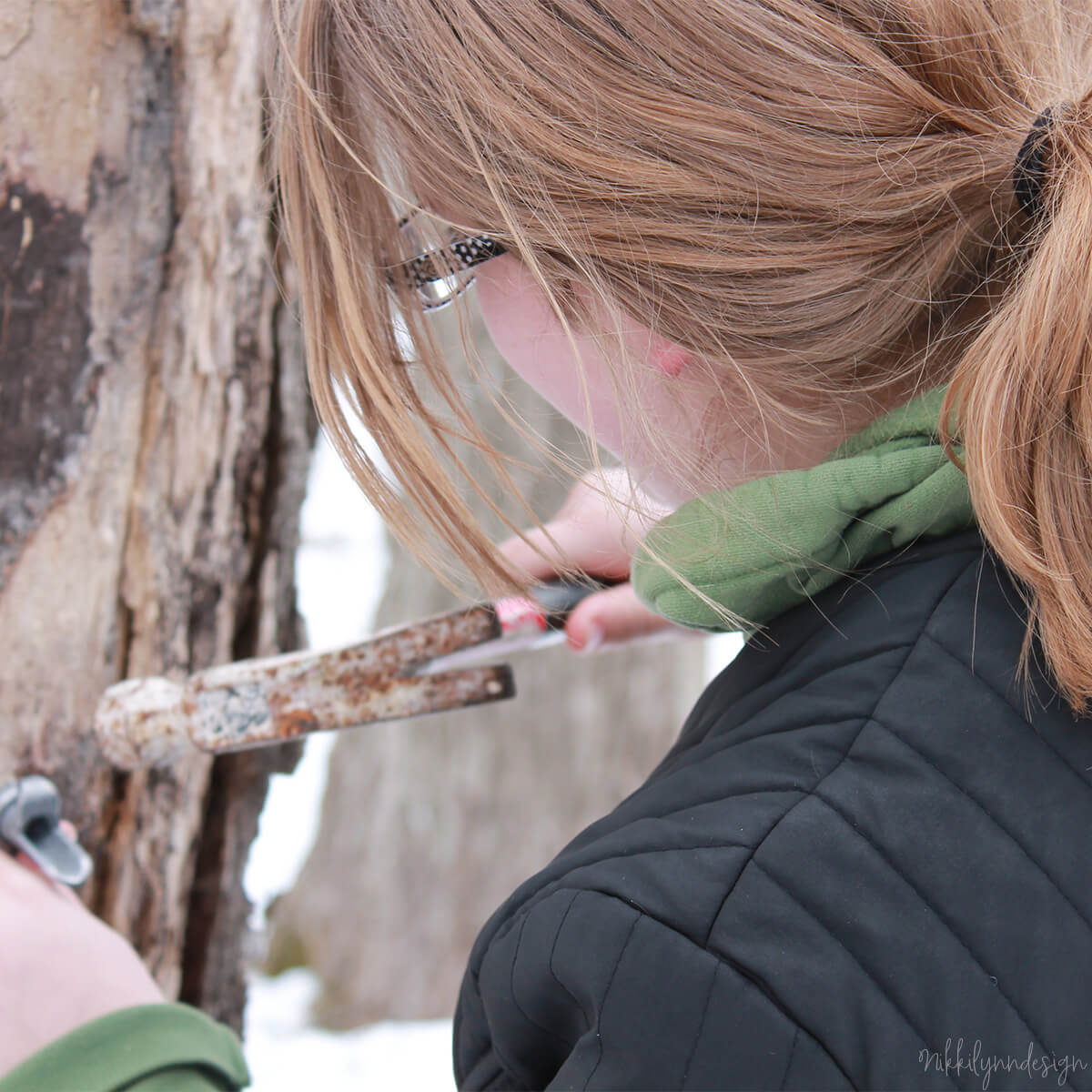
Maple Syrup Tree Tapping in Wisconsin
Maple syrup season is one of the quiet signs that winter is beginning to loosen its grip in Wisconsin. Even when snow still lingers on the ground, the shift between freezing nights and milder days starts the sap flowing, marking the beginning of one of the Midwest’s most familiar seasonal traditions.
For visitors, maple tapping offers a closer look at how real maple syrup is made — from drilling the tree and collecting sap to boiling it down into the rich syrup most of us know from the table. It is a simple process in concept, but one deeply tied to weather, timing, and the rhythms of late winter.
General Info
| Location | Brillion Nature Center |
| City | Brillion |
| County | Calumet County |
| State | Wisconsin |
| Type | Nature center and seasonal educational event |
| Best For | Families, seasonal outings, nature education, and learning how maple syrup is made |
| Best Time to Visit | Late winter to early spring |
| Cost | Free for this event at the time of visit |
| Map | Google Map Location |
| Good to Know | This was a special event, so it is best to call ahead or check current event listings before visiting. |
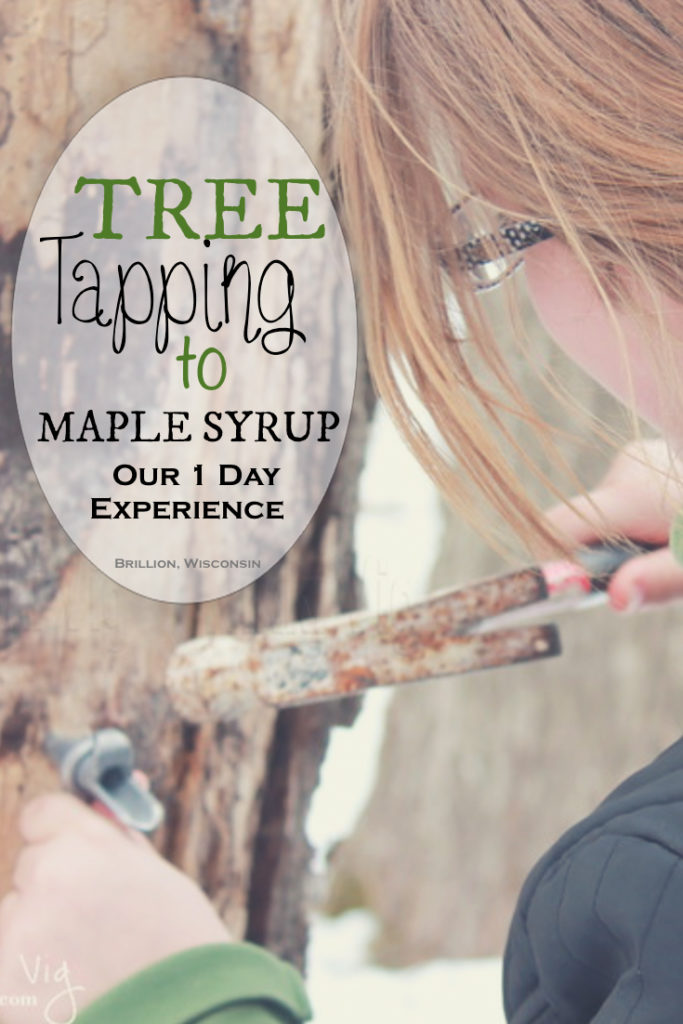
Events like this make a good late winter outing in Wisconsin. They give visitors a chance to see the maple syrup process up close while also spending time outdoors during that stretch of the season when spring is near, but not quite here yet.
Why Maple Tapping Happens in Early Spring
Maple tapping is one of the clearest signs that late winter is beginning to give way to spring in Wisconsin. It fits right into the broader pattern of March seasonal changes in Wisconsin
When daytime temperatures rise above freezing and nights drop below freezing, pressure changes inside the tree encourage sap to flow. That is why maple season usually falls in late winter or early spring rather than later in the year.
In Wisconsin, this often begins around March, though timing varies from year to year. Some seasons start earlier, others later, depending on snow cover, temperature swings, and how quickly spring arrives.
What Trees Can Be Tapped
Several kinds of maple trees can be tapped, including sugar maple, red maple, silver maple, and boxelder. Sugar maples are often preferred because their sap tends to have a higher sugar content, which means less boiling is needed to make syrup.
While maple trees are the classic choice, some people also tap birch, walnut, hickory, and sycamore, depending on the region and the end product they want to make.
How Maple Trees Are Tapped
The process itself is fairly straightforward, though the success of it depends heavily on the weather and the health of the tree.
Step 1: Drill the Hole

A small hole is drilled into the tree a few feet above the ground at a slight upward angle. If the sap is running, a little moisture may already be visible when the drill is removed.
Step 2: Install the Tap
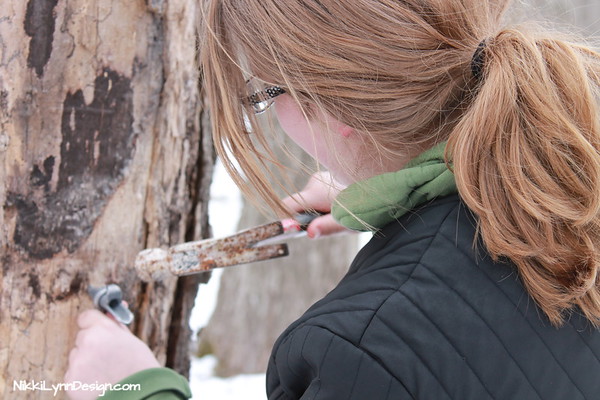
A spile, or tap, is then placed into the hole. This creates the path for sap to leave the tree and drip into a collection container.
Step 3: Hang a Collection Bucket or Bag
Once the tap is in place, a bucket or bag is attached to catch the sap as it drips.
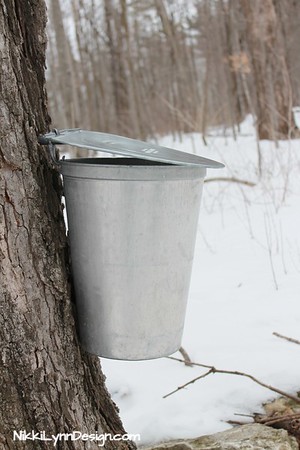
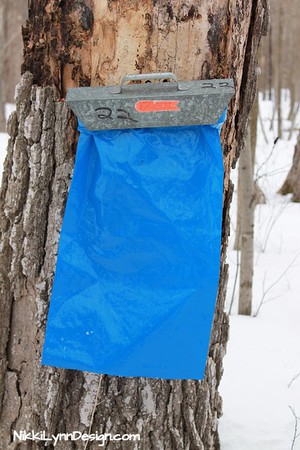
Step 4: Collect the Sap
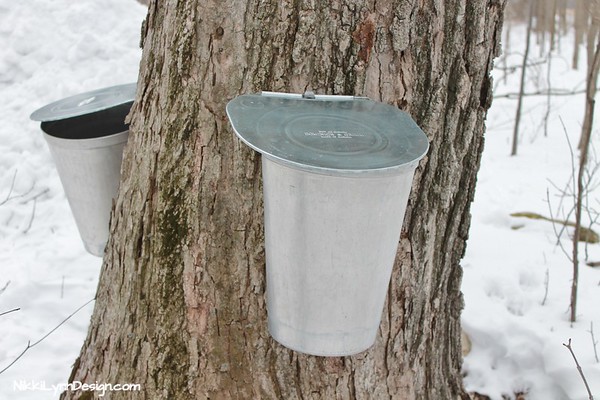
Collected sap looks almost exactly like water. How much gathers — and how quickly — depends on temperature, weather shifts, and the individual tree.
What Maple Sap Looks and Tastes Like
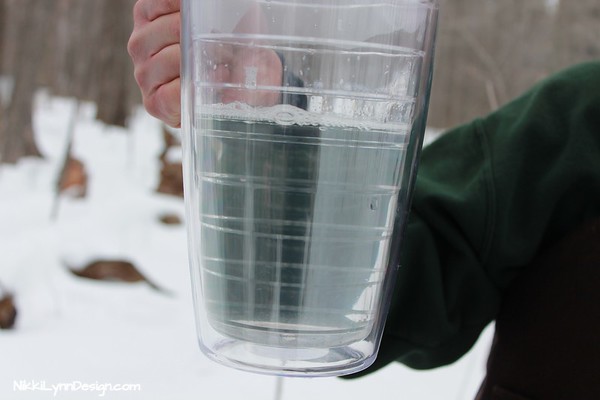
Fresh maple sap is clear and only mildly sweet. It is mostly water with a smaller amount of natural sugar and minerals. That is why so much sap is needed to produce even a modest amount of finished syrup.
This is often one of the most surprising parts of the process for visitors. Before it is boiled, maple sap looks far more like plain water than the dark amber syrup people expect.
From Sap to Syrup
Once enough sap has been collected, it is kept cool until it is ready to be boiled down.
Cooking the Syrup
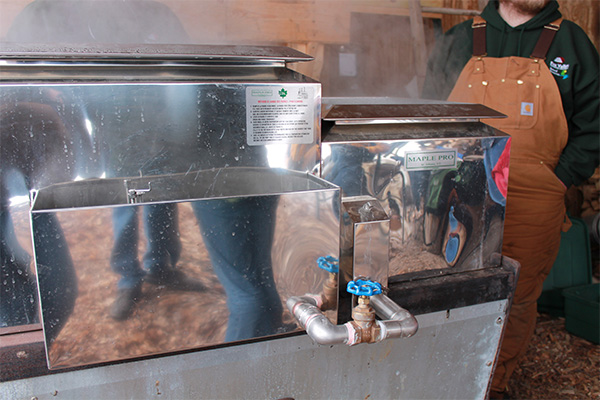
Boiling is what transforms sap into syrup. As moisture evaporates, the sugars become concentrated and the liquid thickens, darkens, and develops its familiar maple flavor.
In this case, a larger commercial evaporator was used, but the basic principle is always the same: time, heat, and a great deal of sap.
Boiled Down to Maple Candy
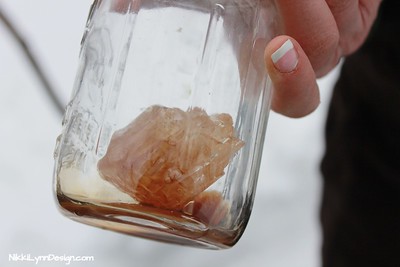
Finished syrup can also be cooked further into maple candy, which shows just how much can come from a process that begins with clear sap dripping from a tree in late winter.
Why Maple Tapping Is Worth Experiencing
Maple tapping connects the landscape, the weather, and one of the region’s best-known foods in a very direct way. It is one of those seasonal traditions that feels simple on the surface but carries a lot of patience, timing, and local knowledge behind it.
For anyone interested in Wisconsin nature, seasonal traditions, or family-friendly educational outings, it is an experience well worth seeking out at least once.
Taste Testing
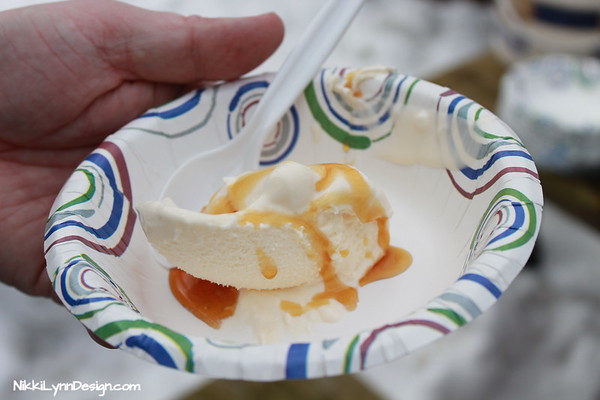
Fresh warm maple syrup has a richness that feels especially fitting at the end of a cold-weather outing. It is a simple reminder of how much time and effort goes into every small taste of the finished product.