Fruits, Herbs & Veggies> Foraging / Recipes / Art
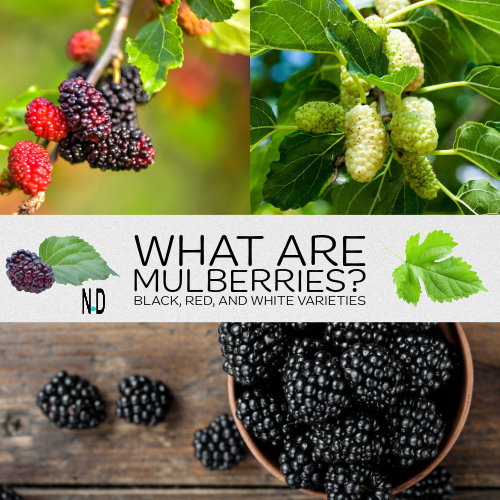
What are mulberries? Mulberries are sweet, blackberry-like fruits that grow on mulberry trees and can range in color from white and red to deep purple-black. If you’ve found a mulberry tree and are wondering what kind it is, I’ll show you how to identify white, red, and black mulberries, what the ripe fruit looks like, and when it’s ready to pick.
I recently picked a basket of juicy mulberries from a friend’s white mulberry tree. Its distinctive leaves and pale fruit make it interesting to compare with the red and black varieties. Mulberries grow wild in many places, but they can also be grown in the yard, where both people and birds enjoy the fruit.
I’ll also explain why white mulberry trees can have both oval and oak-like leaves on the same plant.
What Are Mulberries?
Mulberries are sweet, blackberry-like fruits that grow on trees in the Morus genus. The three commonly recognized types are black mulberry (Morus nigra), red mulberry (Morus rubra), and white mulberry (Morus alba). Depending on the type and stage of ripeness, the fruit can be white, pink, red, deep purple, or nearly black. People enjoy mulberries fresh, dried, or made into jams, while wildlife such as blue jays, American robins, red-eyed vireos, and Eastern gray squirrels also enjoy the fruit.
How to Identify Black, Red and White Mulberries
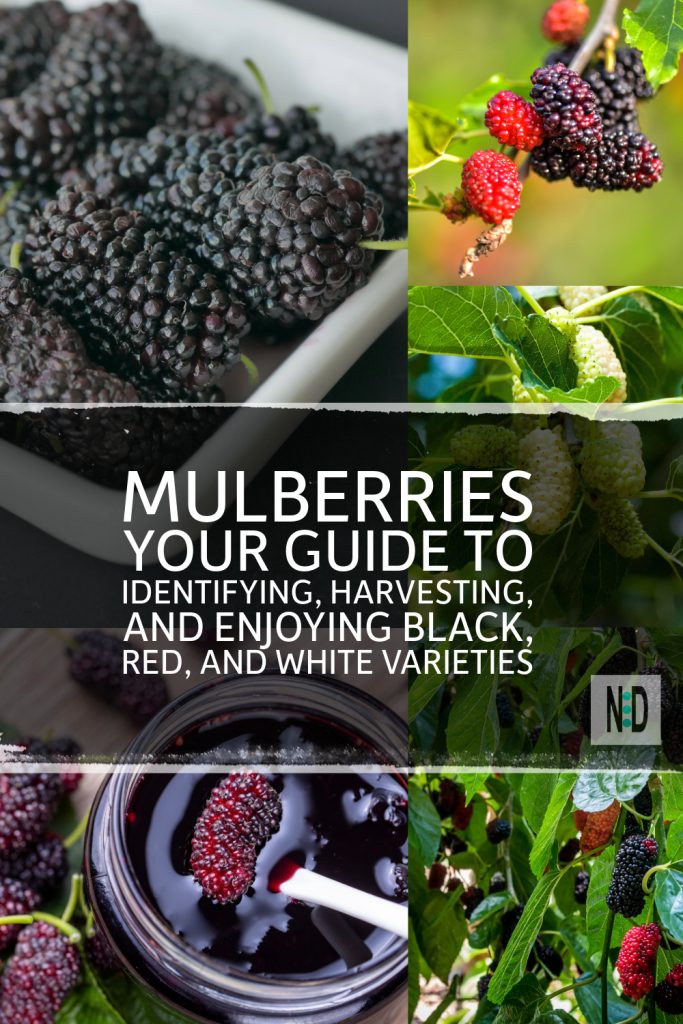
Black, red and white mulberries can be identified by looking at the fruit, leaves, bark and overall growth habit of the tree. Here are the key differences to look for when comparing the three types.
Black Mulberry (Morus nigra)

• Leaves: Typically heart-shaped with serrated edges, 2–6 inches long, glossy green.
• Growth Habit: Bushes or small trees, 6–15 feet tall, with a dense, rounded shape.
• Berries: Deep purple-black when ripe, elongated, sweet with a tart kick, resembling tiny blackberries. Unripe berries are red or green.
• Bark: Smooth, grayish-brown on young plants, rougher with age.
• Where to Find: Common in temperate climates, often in yards or along fences. My bush thrives in full sun!
Red Mulberry (Morus rubra)

• Leaves: Heart-shaped or slightly lobed, 3–7 inches long, rough and hairy on the underside, with serrated edges. Rarely oak-like.
• Growth Habit: Medium to large trees, 20–50 feet tall, with a broad canopy. Seldom found as bushes.
• Berries: Reddish-purple when ripe, sweet-tart, slightly less bold than black mulberries.
• Bark: Gray-brown, often furrowed on mature trees.
• Where to Find: Native to North America, common in forests, riverbanks, or parks.
White Mulberry (Morus alba)

• Leaves: Highly variable due to genetic factors and age. Younger branches or trees often have deeply lobed, oak-like leaves with jagged edges, while older branches may have oval or heart-shaped leaves with smooth or serrated edges—both types can appear on the same tree! Leaves are glossy, 2–6 inches long.

• Growth Habit: Shrubs or trees, 10–50 feet tall, with a spreading canopy.
• Berries: Pale white to pinkish (sometimes purplish), milder and sweeter than black or red varieties. Often smaller and less juicy.
• Bark: Light gray, smooth when young, becoming slightly rough.
• Where to Find: Widespread in urban areas, roadsides, or yards, often considered invasive.
Black vs. Red vs. White Mulberries: Quick Comparison
If you’re trying to identify a mulberry tree, compare the fruit, leaves, size, and growth habit. Here’s a quick look at the main differences between black, red, and white mulberries.
| Feature | Black Mulberry | Red Mulberry | White Mulberry |
|---|---|---|---|
| Scientific Name | Morus nigra | Morus rubra | Morus alba |
| Ripe Fruit | Deep purple-black | Dark red to reddish-purple | White, pinkish, purple, or dark when ripe |
| Leaves | Heart-shaped with serrated edges | Heart-shaped or slightly lobed; rough underneath | Highly variable; may be oval, heart-shaped, or deeply lobed |
| Growth Habit | Small tree or bush with a dense, rounded shape | Medium to large tree with a broad canopy | Shrub or tree with a spreading canopy |
| Flavor | Sweet with a tart kick | Sweet-tart | Generally mild and sweet |
Lookalike Warning
Mulberries are fairly distinctive once you know what to look for, but always positively identify any wild fruit before eating it. Mulberries grow on woody trees or shrubs and produce elongated clusters made up of many tiny fruits.
Don’t confuse them with pokeberries, which grow on non-woody plants, or wild grapes, which grow on vines.
White mulberries with deeply lobed, oak-like leaves can also resemble young sassafras at a glance, but the fruit and growth habit are very different. Avoid eating unripe mulberries, which can cause stomach upset.
When to Harvest Mulberries
Mulberry harvest time varies by species, climate and location. Rather than relying only on the calendar, watch the color and texture of the fruit and how easily it releases from the tree.
• Black Mulberry: Ripe fruit becomes deep purple to nearly black, soft and juicy, and releases easily when picked.
• Red Mulberry: The fruit changes from green to red and finally dark red or reddish-purple as it ripens. Ripe berries should be soft and come away easily.
• White Mulberry: Don’t rely on color alone. Depending on the tree, ripe white mulberries may be white, pink, purple or even quite dark. Look for soft fruit that releases easily from the stem.
Pro Tip: One of the easiest ways to tell when mulberries are ready is to watch what is happening beneath the tree. Ripe berries begin dropping naturally, and birds often discover them quickly. Spread a clean tarp beneath the tree and gently shake the branches to collect ripe fruit.
How to Harvest Mulberries
1. Forage Safely: Only harvest fruit you’ve positively identified. Choose berries from an area that hasn’t been treated with pesticides or other chemicals. Mulberry juice can stain hands and clothing, so gloves are helpful when picking darker varieties.
2. Pick or Shake: Hand-pick ripe mulberries or spread a clean tarp beneath the tree and gently shake the branches. Fully ripe berries should release fairly easily. A hands-free bucket can also make hand-picking easier.
3. Sort: Discard unripe (green/red) or damaged berries for the best flavor.
Storing and Using Mulberries
Fresh mulberries are delicate, so handle them gently and use or preserve them soon after harvesting. Here are a few ways to store and enjoy your mulberries:
1. Refrigerate: Store unwashed mulberries in a breathable container in the refrigerator and wash them just before using. They’re great fresh, adding to yogurt or cereal, or using in desserts.
2. Freeze: Spread clean, dry mulberries in a single layer on a parchment-lined baking sheet and freeze until solid. Transfer the frozen berries to a freezer-safe container or bag. Freezing them individually first helps keep the berries from freezing together in one large clump.
3. Dry: Mulberries can also be dehydrated for longer storage. Dried mulberries can be eaten as a snack or added to granola, trail mix, cereal, or baked goods.
4. Make Jams or Jellies: Mulberries work well in homemade jams, jellies and other preserves. Their flavor varies somewhat by variety, so you can adjust sweetness to suit the berries you’re using.
What Can You Make With Mulberries?
Mulberries can be eaten fresh or used in both sweet and savory recipes. Their sweet-tart flavor works especially well in preserves, desserts, drinks, and baked goods. Here are a few simple ways to use fresh or frozen mulberries:
• Mulberry Jam: Turn ripe mulberries into a sweet-tart spread for toast, biscuits, scones, or desserts.
• Mulberry Ice Cream: Mulberries can be blended into homemade ice cream using a traditional ice cream maker or a Ninja CREAMi
• Smoothies: Blend fresh or frozen mulberries with yogurt, bananas, or other fruits.
• Pies and Tarts: Use mulberries as a filling for baked goods, combining their sweet-tart flavor with a flaky crust.
• Sorbets and Sauces: Puree mulberries for a frozen dessert or make a fruit sauce for pancakes, waffles, cheesecake, or ice cream.
• Salads: Toss fresh mulberries into green or fruit salads for a burst of flavor.
Raw vs. Cooked: Fresh mulberries are soft and juicy and can be eaten right from the tree once properly identified and washed. Cooking changes their texture and concentrates their flavor, making them especially useful for jams, sauces, and desserts.
Health Concerns for Eating Mulberries
Ripe mulberries are commonly eaten as food, but there are a few precautions to keep in mind when harvesting and eating them.
Eat only ripe, positively identified fruit: Avoid eating unripe mulberries and never eat wild fruit unless you’re confident of its identification.
Food allergies are possible: Allergic reactions to mulberry have been reported, although they aren’t common. If you know you have food allergies or have previously reacted to mulberries, talk with a healthcare professional before eating them. PubMed
Choose a clean harvesting location: Avoid collecting berries from areas that may have been sprayed with pesticides or herbicides or exposed to other obvious sources of contamination. Wash harvested fruit before eating it.
Mulberry juice stains: Dark red and purple mulberries can stain hands, clothing and other surfaces. Gloves can make harvesting and processing them a little less messy.
Why Mulberries Are a Forager’s Treasure
Mulberries are one of those wild foods that become much easier to recognize once you know what to look for. From the deeply colored fruit of black and red mulberries to the surprisingly varied leaves and fruit colors of white mulberries, each type has its own identifying features.
Once you’ve positively identified a mulberry tree, the ripe fruit can be enjoyed fresh or gathered for jams, desserts, freezing, drying, and other recipes.
If you have a mulberry tree growing near you, take a closer look at the leaves and fruit and see if you can identify which type you’ve found. And if you have a favorite way to use mulberries, I’d love to hear about it in the comments.
This site contains affiliate links that may provide a small compensation to me at no additional cost to you. Thank you for supporting this site.